policecarPolice chases seem to be extremely prevalent in our everyday goings on lately. Last night I watched the famous “slow speed chase” of O.J. Simpson when he fled the Los Angeles Police Department back in 1994  instead of turning himself in as agreed upon following the murders of his wife Nicole and her friend. The mini-series drama currently being shown on the FX Network about “The Juice” reminded me of the night that slow speed chase happened as my husband and I watched in horror and amazement in 1994 as my husband put together the crib for the child we were expecting in August of that year.  Then I woke up this morning to a text alert from the AJC that there had been another police chase here in Atlanta this morning. This morning’s chase, which was near the Douglas-Cobb county line, near Six Flags Over Georgia,  was of two people suspected of having robbed a convenience store of cash and cigarettes.  This police chase ended with the suspects’ car crashing into a utility trailer. The police caught one suspect and the other suspect got away. Apparently, no one was injured in the police chase this morning.  Thank Goodness, I might add.  In San Francisco, California on Sunday, February 7, three people were killed in a police chase after police chased a car that had been seen “doing circles” in the middle of a city street.

We were not so fortunate, however, with regard to two other police chases that occurred a week ago. In Gwinnett County, a totally innocent older couple was killed in a police chase in which the Johns Creek Police Department started a high speed chase of a vehicle for “equipment violation” because it had multiple antennae.  This chase lasted for 4 miles and reportedly reached speeds of 83 m.p.h.  The couple was driving home after celebrating the 78th birthday of one of them.  The suspect’s car crashed into the innocent couple’s car and killed them. No, the police car didn’t hit the couple’s car, but in the world of proximate cause, “but for” the police car and the police chase this lovely couple would be still be alive.  Tragically, and almost unbelievably, the next day a totally innocent grandmother who was taking her precious two grandchildren to church on Sunday morning,  was killed, along with those precious two grandchildren, in a high speed police chase.  This time it was the College Park Police Department chasing a vehicle driven by a suspect suspected to have stolen a vehicle. The chase lasted a purported 10 miles. Five innocent lives lost in the span of two days due to high speed police chases.

Think for just a minute how you would feel if one of your loved ones were killed because of a high speed chase.  How would you feel?  Would you think the high speed police chase had been unnecessary?  Not worth the risk?  Put yourself in the shoes of those grieving family members for a minute.

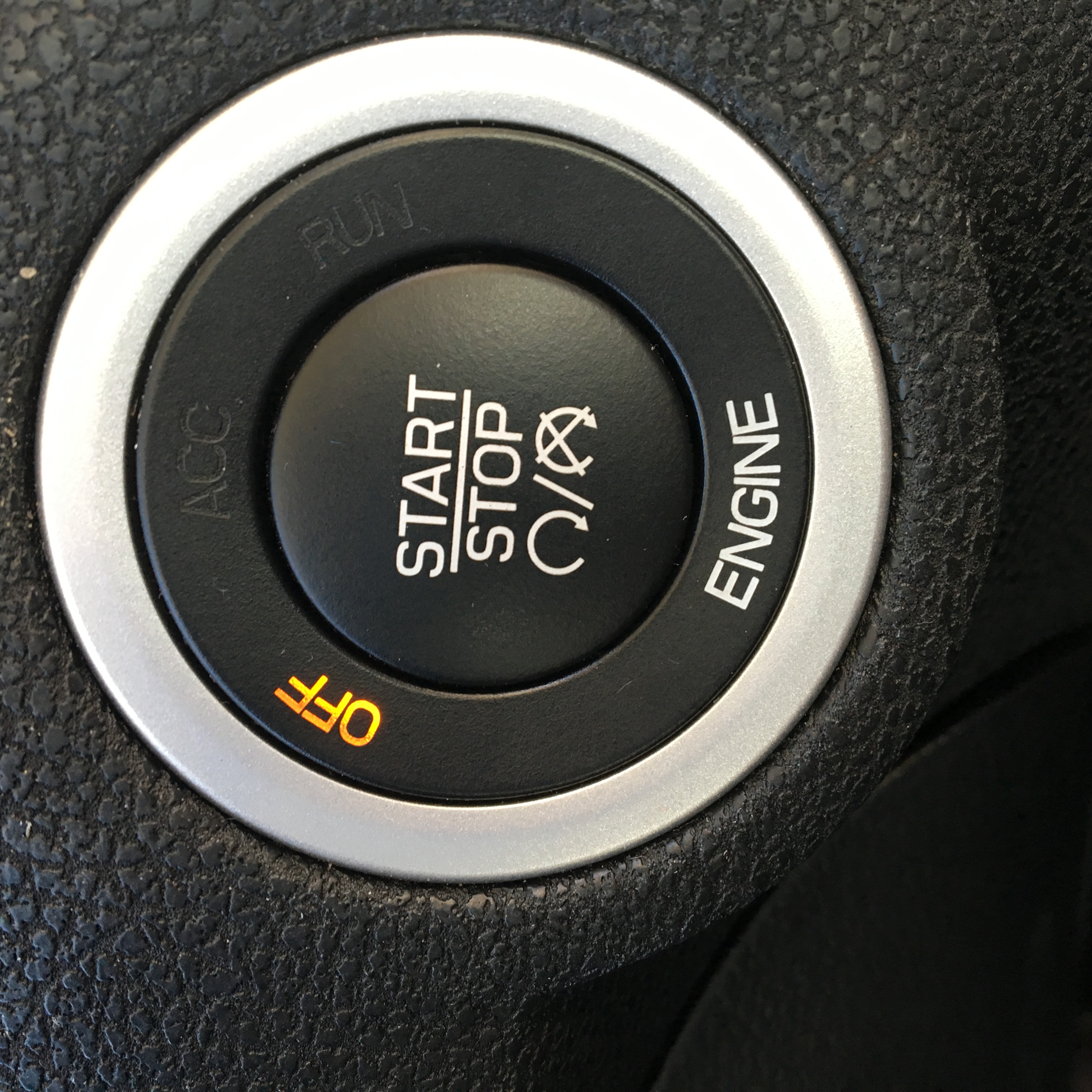
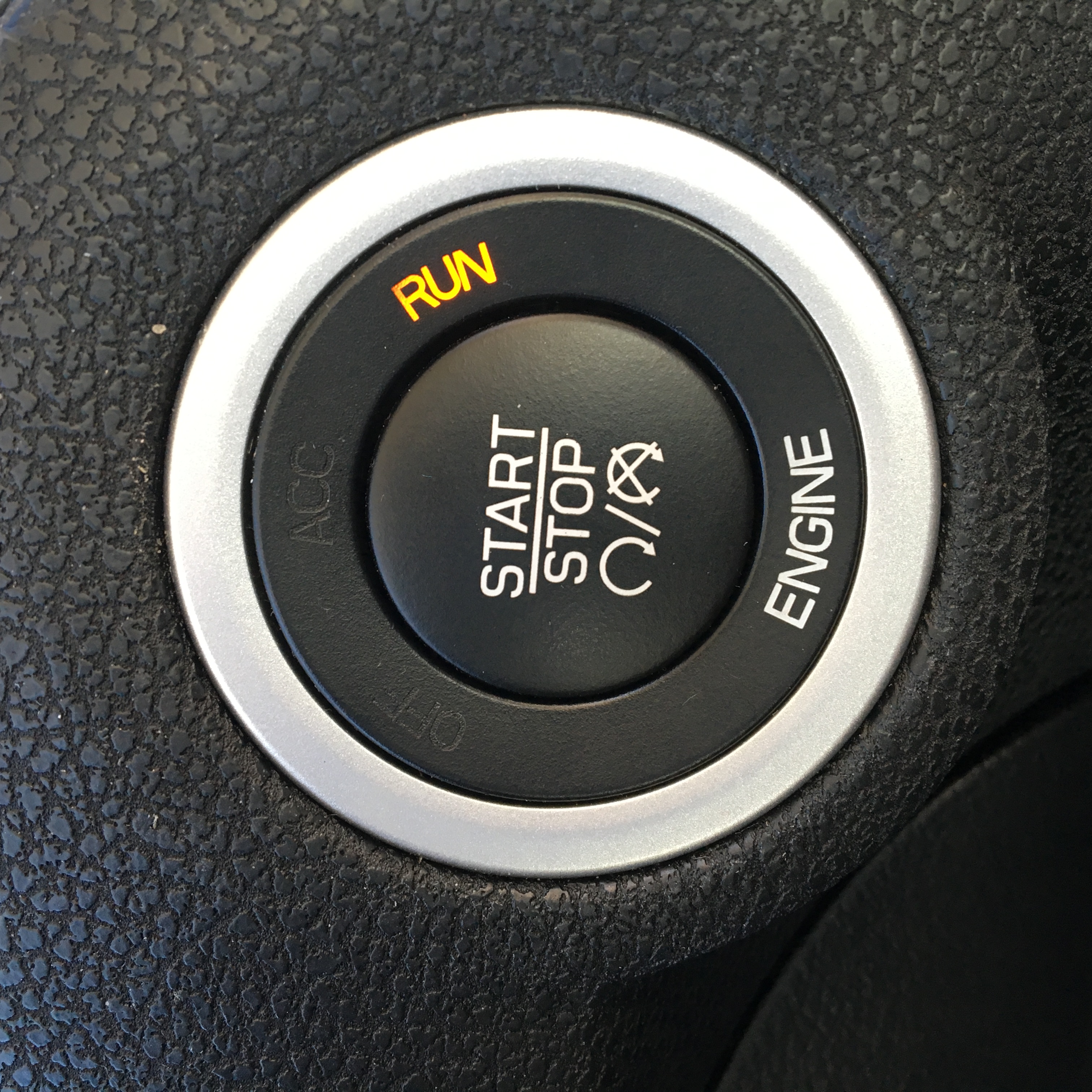
ignition1 ignition2
My car has a push button starter:  am I at risk? The short answer is yes.  Not only are YOU are risk but anyone who lives in your house if you have an attached garage in which you park your car is at risk, too, for carbon monoxide poisoning and perhaps even death. Does your push button starter look anything like the one above? I was driving a rental car on business in another state recently and it had one of these push button starters. I had never used one before, but I had certainly heard of their inherent dangers. The problem is a design flaw. You may think you have turned off the ignition, after all, you have the keyless fob in your pocket with you.  But often the engine is so quiet while in park you don’t realize it is still running. If you park your car in an attached garage, dangerous carbon monoxide gas can easily enter your home and kill you and anyone in your home while you sleep, without your ever waking up to realize there is a fatal hazard in your home.

This design flaw is well known to car manufacturers. “We have documented at least 19 fatalities that are specifically attributed to keyless ignition vehicles since 2009 and 25 more close calls,” said Janette Fennell, founder and president of the safety group KidsAndCars.org. “As more keyless ignition vehicles are sold, we are going to see these predictable and preventable injuries and deaths increase.”

There is a simple solution:  an automatic shut-off system for the car if it has been running for a certain amount of time without moving, e.g., 30 minutes or so. This would prevent any carbon monoxide build up if you accidentally leave your car running in your garage. Some cars do have this safety feature, others do not. It is difficult at this point even to understand why not all such cars would include the automatic shut-off feature. There is currently a class action lawsuit filed against 10 automobile manufacturers who have not incorporated this simple fix of a deadly design defect. According to the suit, the automakers have long known about the risk keyless ignitions pose. In fact, the suit claims, that at least 27 complaints have been submitted to the National Highway Traffic Safety Administration since 2009.  There is evidence that these cars continue to run regardless of how far away the keyless fob is from the running car.

Georgiajudicialbldg
Can a County Police Officer be held liable for failing to prevent the suicide of an inmate under his custody?  That is the interesting question in the case below, which was argued before the Georgia Supreme Court this week. Below is the Court’s summary of the case. It gives you some of the pertinent facts and then a synopsis of the arguments and positions of both sides in the case. For court watchers and trial junkies this is a helpful tool provided by the Court (presumably written by one of the Court’s clerks;  I did not write it) to be able to follow along in oral argument.  By the way, the Georgia Supreme Court’s oral arguments all can be viewed through their livestreaming capability found on its website. 
And if you can’t catch them live, the arguments are taped and available for your leisure viewing on the website, as well.
Pearce v. Tucker will be a case I’ll be watching as it turns on the old “discretionary v. ministerial” argument trap that really needs to be abolished in favor of including all such claims against counties as part of the Georgia Tort Claims Act. This would give this area law the predictably it desperately needs.  Hopefully, the Georgia Legislature will address that one day. In the meantime, every time there is a case against a county employee, like the one below, the Court must go through this time-worn analysis  of whether the employee’s conduct was discretionary, for which the employee has immunity, or whether it was ministerial, for which the employee does not have immunity.  Stay tuned. Should be interesting.

iphone
A police officer just took my cellphone:  Can he do that?  The answer is, as it is with all things legal, it depends.

Cell phones seem to be in the news every day now. They have become such a part of the everyday fabric of the lives of the majority of people that we consider them indispensable, as they often contain so much of our personal information and lives.  How could we possibly go for a day without them.  For example, do you know by heart the telephone number of your spouse or partner or child?  If you were arrested and your cellphone taken from you as part of the arrest, would you know by memory the cellphone number of your closest loved one to be able to call that person from the jail to be bailed out?  (That is NOT a hypothetical scenario, Friends!  It happens).  Think also about the hot car death of 22 month old Cooper Harris in Cobb County last year. A search of Dad Justin Ross Harris’s cellphone revealed internet searches for death in a hot car and also revealed Mr. Harris had been texting sexually explicit messages that day to a minor. What appeared to be a tragic honest mistake of forgetting the child was in the car and leaving him in a hot car where he died turned into an arrest for intentional murder of the child, all because of what was found on the dad’s cellphone.

Just last month our very own Eleventh Circuit Court of Appeals ruled that a pair of child pornography defendants abandoned their rights to a phone after they lost it at a store and gave up attempts to retrieve it. United States v. Johnson, No. 14-12143, and United States v. Sparks, No. 14-12075 (11th Cir. Dec. 1, 2015).

Georgia Seal
Do we elect our judges in Georgia?  That seems like a yes or no question, doesn’t it. But in the words of Coach Lee Corso, “Not so fast!”  Why is that hard to answer?  Because it depends.

You may have seen in the news a recently filed lawsuit challenging the Governor’s appointment of three newly created positions on the Georgia Court of Appeals.  The basis of this challenge to the gubernatorial appointments is that the Georgia Constitution requires judges to be elected. The Georgia Constitutional provision the challengers are relying on states:  “All justices of the Supreme Court and the judges of the Court of Appeals shall be elected on a nonpartisan basis for a term of six years.”  While the Constitution does provide the governor with the power to appoint persons to vacancies “in certain circumstances,” those circumstances are limited in the Constitution to “death, resignation, or otherwise,” the suit said.

That language “shall be elected” seems pretty strong, doesn’t it?  “Shall” has always been interpreted in legal parlance to be mandatory. No ifs, ands or buts.  So the challengers seem to have a point, right?  The exception to the mandatory election is only “death, resignation or otherwise.”  It does not say in the case of a newly created position on the bench.   Many Georgia voters may assume we elect our judges.  But the truth is the Governor gets to appoint a vast majority of judges.  For example, if a judge retires prior to the completion of his or her term, the Governor has the right to appoint that judge’s successor.  Only if a judge completes his or her term of office until the next election will the voters of Georgia actually elect that judge’s successor. Are you wondering whether the judge in your county was elected or appointed?  That information is readily available. And consider this:  if the Governor appoints someone to fill a vacancy on the bench, then that person will run as an incumbent in the next election. As a practical matter, it is extremely difficult to beat an incumbent judge in Georgia. So the power of appointment by the Governor is pretty important.

911call
There has been a lot of press this past week about the near death of NBA basketball player Lamar Odom at the Love Ranch in Las Vegas.  Fortunately, Mr. Odom’s condition has improved dramatically.  As part of the media frenzy about the incident, parts of the 911 calls when Mr. Odom was found unconscious have been played over and over on the radio and on the internet.  I have heard several “journalists” comment that they can’t believe the 911 calls were made public and they should be private.

So, is your 911 call public information?  Yes! Any 911 call is public information subject to the State’s open records act.  Here in Georgia, our Georgia Open Records Act (“ORA”), O.C.G.A. Section 50-18-70 et. seq., defines “public record” as “all documents, papers, letters, maps, books, tapes, photographs, computer based or generated information, data, data fields, or similar material prepared and maintained or received by an agency or by a private person or entity in the performance of a service or function for or on behalf of an agency or when such documents have been transferred to a private person or entity by an agency for storage or future governmental use.”  A taped 911 call certainly fits within this definition. And citizens shouldn’t want it any other way.  The Open Records Act is sometimes referred to as “The Sunshine Law” because it throws light on what your government is doing.   As our Attorney General Sam Olens has said “Government operates best when it operates openly.” –Attorney General Olens.  Give credit to AG Olens who has made strengthening the Georgia Open Records Act one of his primary goals.

When I represent a client in which there was a 911 call made, such as a car wreck, or an injury on a business premises, or anything of that nature, I routinely immediately request the 911 calls through the Georgia Open Records Act. I do this to obtain them before they might be lost or erased.  911 calls can be a treasure trove of information. Quite often I obtain the names of eyewitnesses to car wrecks who are often never even listed on the police report. Plus they often contain a short statement from the eyewitness about how the wreck happened, stated immediately after they saw it!  That’s pretty hard to beat!!  So, yes, any 911 call is available to the public with a simple request and I will continue to request them in every case of mine.

contract-signing-1474333
To trial lawyers, arbitration is a dirty word. We have fought tooth and nail against any forced arbitration clauses as they take away your Constitutional right to a trial by jury for any dispute. Have you signed an arbitration clause and didn’t even know it? Most likely, yes. I would venture a guess that most American citizens have and you would never know it until a dispute arises. That’s when the wrongdoer throws the arbitration clause in your face and (figuratively) says “you can’t sue me (i.e., you can’t hold me responsible). Here are five things to know about arbitration clauses:

  1. “Mandatory” Arbitration clauses are not mandatory. An arbitration clause is nothing more than a waiver of the right to a jury trial to decide any dispute. But for a waiver to be valid it must be “knowing,” i.e., you must know what you are giving up or “waiving” at the time you give it up.  Arbitration clauses, by definition, are not “knowing” because you are required to sign or submit to them pre-dispute or pre-injury, before you even know what harm has or may be done. How can that possibly be a “knowing” waiver?  It can’t. Many courts have invalidated so-called “mandatory arbitration” clauses for his very reason.   Arbitration clauses often appear, for example, in the admission papers of a nursing home. The admitting family member must sign 20 pages or so to get their loved one admitted into the nursing home and the “mandatory arbitration” clause is hidden somewhere on page14 in fine print that no lay person could possibly read or understand.  The family member must sign these documents at what may very well be once of the worst times in his or her life, when the decision to place his or her spouse or partner, who perhaps they have lived with and loved for 40 years, into another living facility to be cared for by other people. The loved one’s health is probably failing. And yet nursing homes are slipping these “mandatory arbitration” provisions under the noses of their customers every day in America, without explaining what it is or what it means, during a life crisis for the consumer. What’s fair about that? Nothing.
  2. “Mandatory” arbitration clauses protect the institution not the consumer.  I have had some success in the nursing home scenario described above in getting Georgia judges to invalidate arbitration clauses because they are not a “knowing” waiver of a known right. One such arbitration clause I defeated stated that the arbitration must be conducted in “accordance with the American Health Lawyers Association (AHLA) Alternative Dispute Resolution Service Rules of Procedure for Arbitration….”  The American Health Lawyers Association is roughly 13,000 lawyers, which  “includes in-house counsel, compliance and privacy officers, finance officers, health care consultants, regulatory professionals, those employed in health care, public health, government, and academia.” This means the AHLA members are lawyers for the nursing homes. They are not lawyers for the patient or family member. Does that seem like a level playing field to you, conducting this forced arbitration according to the rules devised by the nursing home lawyers? Not hardly.

ussupremecourtfacade
The Georgia General Assembly enacted a law during the 2015 Legislative Session, known as “The Hidden Predator Act” that reopens the statute of limitations for bringing suit against a sexual molester.  This new law went into effect on July 1, 2015.  This unusual law essentially creates a new statute of limitations to sue sexual molesters if the abuse occurred when the victim was under 18 years of age and the lawsuit is filed within two years “from the date that the plaintiff knew or had reason to know of such abuse and that such abuse resulted in injury to the plaintiff.” O.C.G.A. Section 9-3-33.1 (b)(2)(A)(ii).  This is known as the “discovery” provision of the new law and allows a victim to sue the institutional for which the sexual predator worked or with which he was affiliated.  Interestingly, even if the “discovery” of the abuse occurred over two years ago, this new law reopens the statute of limitations for another two years solely against the individual sexual predator.  it states:  “For a period of two years following July 1, 2015, plaintiffs of any age who were time barred from filing a civil action for injuries resulting from childhood sexual abuse due to the expiration of the statute of limitations in effect on June 30, 2015, shall be permitted to file such actions against the individual alleged to have committed such abuse before July 1, 2017, thereby reviving those civil actions which had lapsed or technically expired under the law in effect on June 30, 2015.”  O.C.G.A. Section 9-3-33.1(d)(1).

To date there has apparently been one lawsuit filed using this new statute, in Camden County, against a karate instructor. Six men are plaintiffs in that lawsuit who all allege they were sexually abused by their karate instructor when they were teenagers.  We will be watching that lawsuit closely.

I call the new law unusual because it is the first time that I can remember that the Georgia General Assembly lengthened a statute of limitations to allow more time to sue and the first time I can remember that the Georgia General Assembly simply revived what were otherwise lost lawsuits. This is quite a milestone for the Georgia Legislature.

head on collision
The Georgia State Patrol and and various National Databanks, including the National Safety Council, have for years kept the morbid statistics of how many people die during any given Holiday weekend. I have blogged about this in the past and try to keep tabs on whether Georgia highways are getting safer. Here are 5 things to know about traffic safety from the 2015 Labor Day:

  1.  In Georgia this past weekend 14 people lost their lives in traffic incidents as reported by the Georgia State Patrol. Just for comparison’s sake, there were only two traffic fatalities in Connecticut. In Kentucky there were nine.
  2. The National Safety Council estimated there would be 395 traffic fatalities in the United States this Labor Day. Final National numbers are not yet in as some polls include any fatalities up to Tuesday morning.

greekletters
With college students  going back to school this week and next, many new freshman or transfer students are probably considering joining Greek Life on campus. Most schools have some sort of sorority/fraternity groups, with objectives being to provide an outlet for new students to get to know each other, form group bonds, and to give back to the community, to name a few. Over the last few years, some dangerous and sometimes fatal “hazing” practices by fraternities and sororities have come to light, and many have begun to pose the question: are these organizations as beneficial as they seem?

Some groups suggest that affiliation with a Greek organization leads to higher rates of success later in life. An article by USA Today stated that “85% of Fortune 500 executives were part of Greek life… And college graduation rates are 20% higher among Greeks than non-Greeks.” Psychologically speaking, this can be true. Feeling supported by like-minded individuals definitely contributes to better mental health and in turn, higher likelihood to succeed in life. Being a part of a Greek organization also connects you to generations of alumni with the same affiliation, which is certainly a plus when searching for jobs and making career connections. Sororities and fraternities also have a rich history in our country, the first being founded in 1831. Having a connection to such a renowned historical tradition is very important for some, especially “legacy” families, students who’s mother, grandmother, and so on were members of the same sorority. These organizations also undoubtedly benefit many charities. Each year most groups organize a fundraising event to benefit the charity affiliated with their organization. For example, Phi Mu at the University of Georgia raised $143,942 this year for the UGA Miracle program supporting Children’s Healthcare of Atlanta.

Unfortunately, there have been a number of events giving sororities and fraternities a bad and scary reputation. There is always the stigma that Greek groups are associated with partying, drinking and hazing. In some cases, the hazing of potential members has gone way too far. Over the last few years there have been some highly publicized cases of deaths by hazing from groups around the country. The Washington Times reported that since 2005, more than 60 people have died due to fraternity incidents. Recently in California, a family sued after their 19-year old from California State University Northridge died after being forced to hike 18 miles with his fellow Pi Kappa Phi pledges. The Clemson University community was shocked by the death of Tucker Hipps, a pledge of the Sigma Phi Epsilon fraternity, after reportedly being killed in a fight with his fraternity brothers over breakfast food. Hipps’ parents are filing a $25 million wrongful death lawsuit against the Sig Ep brothers. Reports of alcohol abuse, sexual assault, and flagrant racism also have been widely publicized over the last few years.

Awards
American Association for Justice Badge
Georgia Trend Legal Elite Badge
State Bar of Georgia Badge
Georgia Trial Lawyers Association Badge
ABOTA Badge
LCA Badge
Top 50 Women attorneys in Georgia Badge
Super Lawyers Badge
Civil Justice Badge
International Society of Barristers Badge
Top 25 National Women Trial Lawyers Badge
Contact Information