Articles Posted in Motor Vehicle Accidents

911call
There has been a lot of press this past week about the near death of NBA basketball player Lamar Odom at the Love Ranch in Las Vegas.  Fortunately, Mr. Odom’s condition has improved dramatically.  As part of the media frenzy about the incident, parts of the 911 calls when Mr. Odom was found unconscious have been played over and over on the radio and on the internet.  I have heard several “journalists” comment that they can’t believe the 911 calls were made public and they should be private.

So, is your 911 call public information?  Yes! Any 911 call is public information subject to the State’s open records act.  Here in Georgia, our Georgia Open Records Act (“ORA”), O.C.G.A. Section 50-18-70 et. seq., defines “public record” as “all documents, papers, letters, maps, books, tapes, photographs, computer based or generated information, data, data fields, or similar material prepared and maintained or received by an agency or by a private person or entity in the performance of a service or function for or on behalf of an agency or when such documents have been transferred to a private person or entity by an agency for storage or future governmental use.”  A taped 911 call certainly fits within this definition. And citizens shouldn’t want it any other way.  The Open Records Act is sometimes referred to as “The Sunshine Law” because it throws light on what your government is doing.   As our Attorney General Sam Olens has said “Government operates best when it operates openly.” –Attorney General Olens.  Give credit to AG Olens who has made strengthening the Georgia Open Records Act one of his primary goals.

When I represent a client in which there was a 911 call made, such as a car wreck, or an injury on a business premises, or anything of that nature, I routinely immediately request the 911 calls through the Georgia Open Records Act. I do this to obtain them before they might be lost or erased.  911 calls can be a treasure trove of information. Quite often I obtain the names of eyewitnesses to car wrecks who are often never even listed on the police report. Plus they often contain a short statement from the eyewitness about how the wreck happened, stated immediately after they saw it!  That’s pretty hard to beat!!  So, yes, any 911 call is available to the public with a simple request and I will continue to request them in every case of mine.

head on collision
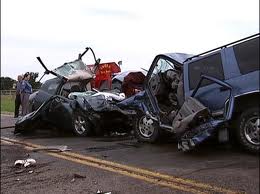
The Georgia State Patrol and and various National Databanks, including the National Safety Council, have for years kept the morbid statistics of how many people die during any given Holiday weekend. I have blogged about this in the past and try to keep tabs on whether Georgia highways are getting safer. Here are 5 things to know about traffic safety from the 2015 Labor Day:

  1.  In Georgia this past weekend 14 people lost their lives in traffic incidents as reported by the Georgia State Patrol. Just for comparison’s sake, there were only two traffic fatalities in Connecticut. In Kentucky there were nine.
  2. The National Safety Council estimated there would be 395 traffic fatalities in the United States this Labor Day. Final National numbers are not yet in as some polls include any fatalities up to Tuesday morning.

Ridesharing services have been advancing in the app world over the last few years. Quite a few companies have become enormously popular for their efficiency and ease compared to traditional taxi companies. GPS based with pre-set payment settings, the whole interaction takes place online and even shows you a map counting down the moments until your driver arrives. Uber has quickly become a household name, and alongside Lyft, dominate the ridesharing sphere. There are, however, a number of safety concerns associated with the process. It is a rather strange concept to get into a stranger’s personal car and trust them to drive you safely to your destination. Recently, Uber has been attempting to address many of these concerns as well as handle a number of injury lawsuits that have occurred.

Fortunately from an insurance perspective, these ridesharing companies have got you covered. There is major debate between the taxi companies and Uber/Lyft regarding this topic, because taxi companies believe they better protect against possible insurance disparities after an injury. Largely in response to this criticism and attack by traditional taxi companies,  Lyft and Uber now both have  liability policies that provide additional coverage in the event that the passenger is injured in a driver’s vehicle and the driver’s insurance doesn’t cover all of their injuries, which is almost always the case. Not only that, but even in the event of an accident in which the company driver is not at fault, and the other motorist at fault is uninsured, they will still provide coverage if you are injured.

The Georgia Legislature passed a ridesharing bill this session (2015) that essentially sought to level the regulation  of Uber and Lyft with that of traditional taxi companies.  House Bill 225, which passed the Senate by a 48-2 vote, is the culmination of efforts to require the app-based transportation industry to meet the same standards that apply to other transportation providers, such as taxis and limousine companies.  “The world as we know it in transportation has changed because of transportation companies like Uber and Lyft,” said Sen. Brandon Beach, R-Alpharetta, who carried the bill in the Senate. “This creates a new framework that allows them to grow with light regulation and common-sense policies.”  Governor Deal signed the bill into law in March 2015 which mandates companies like Uber must have $1 Million in insurance coverage for its passengers. There continue to be squabbles between the traditional taxi companies and Uber, but free market principles of competition should control the outcome.

As many of you may know, the summer is peak time for music festivals. These events draw eclectic crowds of all ages, and cater to a wide range of musical and cultural interests. Recently there was Bonnaroo in Manchester, Tennessee, Firefly in Dover, Delaware, Electric Daisy Carnival in Las Vegas, and many more happening all over the country. These events attract massive crowds by the hundreds of thousands, and unfortunately, they’re no Woodstock. Every year people die at major music festivals, accompanied by hundreds of arrests and injuries. Considering the mass drug and alcohol use that typically takes place, this is not entirely surprising. Some people are beginning to point the finger at the electronic dance music community (EDM) as a whole, as there seems to be more drug related deaths at those festivals. One major electronic festival, Electric Zoo in New York City, was forced to cancel their final day this year due to deaths involving MDMA. Often in these circumstances, it is difficult to allocate responsibility. It is entirely foreseeable that in that large of a crowd, something will go wrong. Police presence and safety measures are not, unfortunately proving up to the task of reasonable safety for such a large crowd.  Families of several victims of an incident at the South by Southwest music festival in Austin, Texas, however, are attempting to hold the festival corporations accountable for wrongful death.

Continue reading ›

safetyfirst
One of my favorite holidays, the Fourth of July, celebrating our Nation’s Independence, has just passed. It’s the time to celebrate our nation’s formation and relax, wherever you might be, with family and friends over the long weekend. Unfortunately, it’s also one of the most dangerous weekends of the year due to an array of safety hazards. I hope it was a safe holiday for you and your family. Here are some things to keep in mind:

Driving: Independence Day weekend consistently results in the highest amount of fatal crashes in the U.S. Between 2008 and 2012, there was a calculated average of 127 fatal car accidents each year just on July 4th. Just about everyone is going to be on the road, and will likely be distracted and hurried. Distracted driving, as I’ve written about before, has become a major problem over the last decade due to cell phones. For your own safety and those around you, put them away while driving! Alcohol is also a significant factor in crashes, and accounted for 41% of deaths last year. So needless to say, DON’T drive drunk. The ride app Uber is a great new tool and when in doubt, call a cab. Also, DO remember to buckle up. The CDC reports that it can reduce injuries and deaths in a crash by 50%.

Fireworks: Because of the new laws put in to effect July 1st, it is now legal to set off fireworks in Georgia between certain times on holidays. This is great news for fireworks fanatics, because you won’t have to drive to Alabama anymore for your sparklers; however, it is very important to be cautious while using them. In 2013, there were eight deaths and 11,400 injuries in the US just due to fireworks. If you’re lighting them yourself, DO make sure you’re in a clear outdoor area with no surrounding trees or brush. Keep a safe distance from them as they go off, and always have a water source nearby, just in case. I also recently read about fireworks triggering PTSD for veterans, as the loud explosions can cause distress for those dealing with the disorder. If you know of veterans in your neighborhood and plan to set off fireworks this weekend, it may be courteous to let them know.

I saw in this morning’s AJC an article on the front page about distracted driving. Unfortunately, the article reports that distracted driving has gone up, that roadway deaths on Georgia roads have increased by a third and that distracted driving may very well be to blame for that increase.  Online today I also read of the tragic death of a Roswell High School student from a car wreck with another teenager Saturday night.  We do not yet know what caused this tragic accident.

As the mother of a 20 year old college student and a 17 year old senior in high school, both of whom drive on a regular basis, this is the sort of news that leads to a lot of sleepless nights. I know you parents out there can sympathize. The question is what can we do to reduce the number of such highway deaths? Has distracted driving made a difference?

Most of us may think of “distracted driving” being solely texting while driving (something I labeled “TWD” years ago).  Texting While Driving is now illegal in Georgia (and has been since 2010) and in 45 states total. 14 states, D.C., Puerto Rico, Guam and the U.S. Virgin Islands prohibit all drivers from using hand-held cell phones while driving.  That means simply making telephone calls on your mobile phone while driving is illegal, much less texting while driving. But what is the distinction between texting while driving and calling while driving?  Is there one?  Can’t punching in someone’s cell phone number while driving be just as distracting as texting a message while driving? The National Highway Traffic Safety Administration reported that in 2012 driver distraction was the cause of 18 percent of all fatal crashes – with 3,328 people killed – and crashes resulting in an injury – with 421,000 people wounded. 

Picture 005

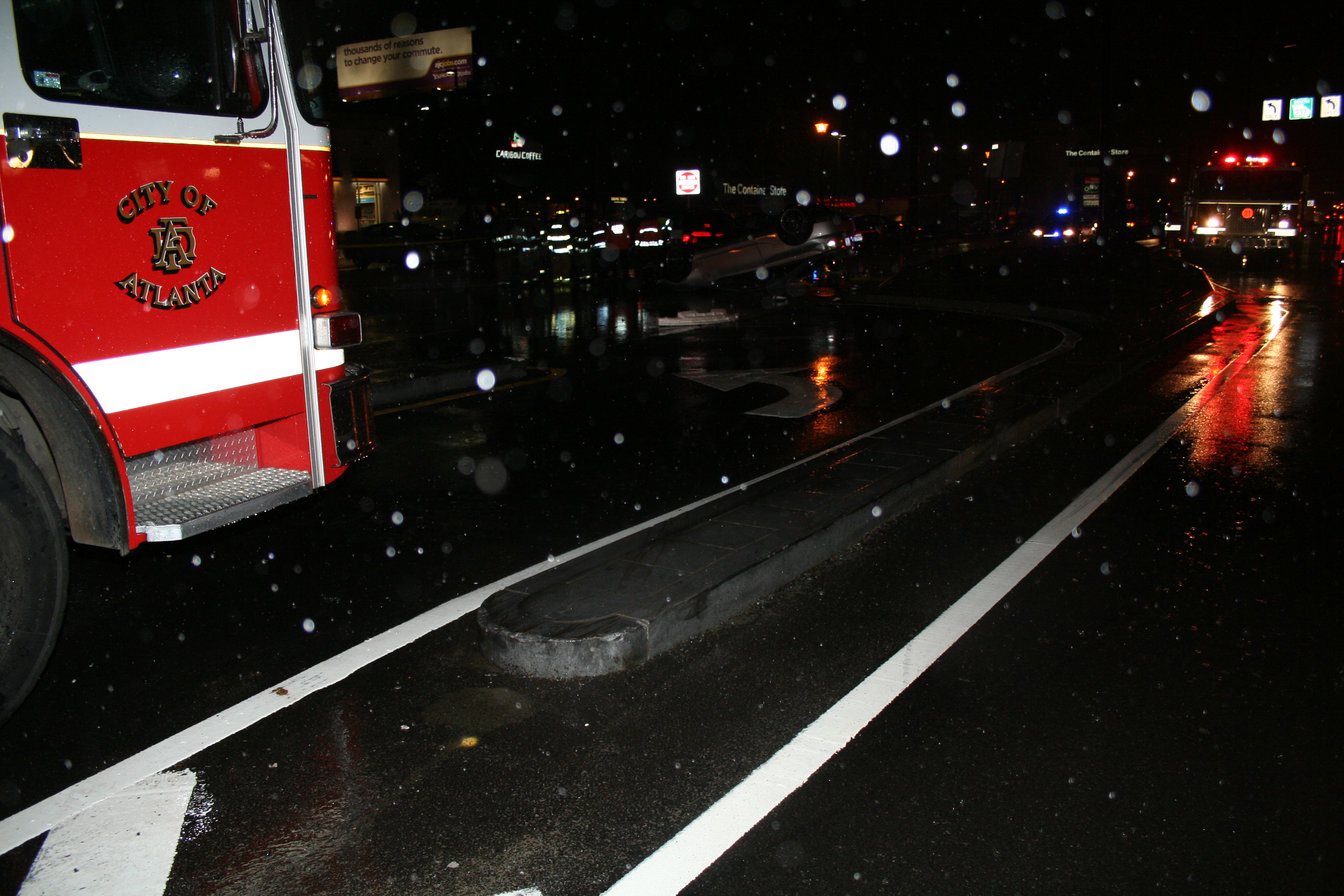
I have written before about my case against the Georgia Department of Transportation and the City of Atlanta about  a defective median installed in the middle of the City of Atlanta’s busiest street, Peachtree Street, in the heart of Buckhead at the intersection of Peachtree Street and Piedmont Road. This intersection may well be one of the busiest intersections in Buckhead, the city’s premiere retail, hotel and financial district. This median was installed in October 2007 and was opened for the motoring public without sufficient warning signage and without sufficient lighting. My clients’ daughter was killed in 2008  in a single car accident when the driver of her car hit the median, because it was not readily visible and was not appropriately marked. We filed suit in back in 2010 and are still fighting four years later. Various appeals have lengthened the litigation. We continue to fight. On November 12, 2014, we received a wonderful opinion from the Georgia Court of Appeals that will allow us to proceed with a jury trial against the City of Atlanta. Below if the opinion. We had already received a similar opinion regarding our claims of negligence against the Georgia Department of Transportation.  This puts us one more step toward justice for the family.

Robin Frazer Clark pursues justice for those who have personal injury claims as a result of being injured in motor vehicle wrecks, trucking wrecks, defective products, defective maintenance of roads, premises safety, medical malpractice and other incidents caused by the negligence of others. Ms. Clark is the 50th President of the State Bar of Georgia and a Past President of Georgia Trial Lawyers Association and has practiced law in Georgia for 26 years. Mrs. Clark is listed as one of the Top 50 Women Trial Lawyers in Georgia and is a Georgia Super Lawyer. Robin Frazer Clark~Dedicated to the Constitution’s Promise of Justice for All.


https://encrypted-tbn0.gstatic.com/images?q=tbn:ANd9GcTHUFQ_QnOcs4XRxzKsZ_Ht8O8lNhYUKU7Rm-2FgbAflb4VC_I5
I have handled hundreds and hundreds of car wreck cases in Georgia.  Very often I hear this common theme from prospective clients:  “I Could Have Been Killed!”  And it is often very true…they could have been killed, but thankfully, they weren’t.  So do you have a case when you could have been killed but you weren’t?  Or better put, do you have a case when you could have been killed but you weren’t physically harmed at all?

I thought of this because this morning while perusing the headlines I came upon this story about a JetBlue plane that experienced a blown engine and made an emergency landing.  Smoke filled the cabin, oxygen masks magically came down, and flight attendants yelled “Brace!  Brace!  Brace!” as they landed, which fortunately, they did so safely without injury.  Watch the video and you will see that many people on board thought they were about to die.  And, in fact, they had a long time to think that as the plane, which was over water, had to turn around and go back to California to land. They all could have been killed, but they weren’t.

Therein lies the conundrum.

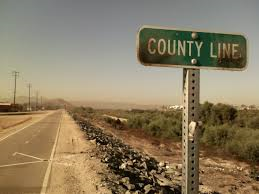
countyline
Let’s say you have been injured in a car wreck because of negligent maintenance of a right of way owned by the County.  Can you sue the County for your injuries?

Of course, I have tried to teach my readers the short answer is always yes, you can sue anybody for anything. The real question then is if you sue the County, will your lawsuit be successful? The answer there, unfortunately, is probably not.

Counties in Georgia enjoy wide immunity from being held accountable through lawsuits. This is called “‘sovereign immunity,” which simply means you can’t sue the King. Were your car wreck to have occurred on a State-owned right-of-way, maintained by the State of Georgia, you would have a viable lawsuit against the State of Georgia under a statute known as “The Georgia Tort Claims Act,”  O.C.G.A. Section 50-21-20 through -37.   The State of Georgia, in passing “The Georgia Tort Claims Act,” recognized the inequity of a situation that would allow a Georgia citizen to be able to sue and recover from a private individual or corporation if they were negligent but not from the State of Georgia if it, acting through its employees, were negligent.  The trade-off agreed in the statute for doing away with sovereign immunity for the State is an individual employee may not be personally sued (so it protects State of Georgia employees from litigation) and recovery is capped (regardless of injury) at $1 Million.  This seems like an inherently reasonable trade-off…good for all citizens of the State of Georgia.

statefarm
Do I have a case against my insurance agent?  I feel like my insurance adjuster cared more for the insurance company than for me, her client.  Who does my insurance agent really work for?  Me or the insurance Company?

Good question! No doubt many of us think our insurance agent, with whom we have worked with, confided in and trusted, is our friend and our agent, not the insurance company. But as I often say in these blogs:  Not so fast!  Although the term “agent” is loosely thrown around in all sorts of scenarios, the actual word “agent” is loaded with ambiguity. Natch, if I have purchased my car and homeowners insurance through my “agent” I would assume that person works for me and would always have my best interests in mind. But, unfortunately, especially under Georgia Law, it doesn’t always operate so smoothly.

For example, if an insurance “agent” is independent and sells policies for multiple insurance companies, chances are he or she would be considered an “agent” of the insured who must favor the insured’s interests over the company’s. If, however, the insurance “agent” is an employee of the insurance company and not independent, then chances are this type of insurance “agent” is actually an agent of the company, not of you, and that type of “agent”/employee would put the interests of the insurance carrier over your own.

Awards
American Association for Justice Badge
Georgia Trend Legal Elite Badge
State Bar of Georgia Badge
Georgia Trial Lawyers Association Badge
ABOTA Badge
LCA Badge
Top 50 Women attorneys in Georgia Badge
Super Lawyers Badge
Civil Justice Badge
International Society of Barristers Badge
Top 25 National Women Trial Lawyers Badge
Contact Information