February 7, 2009

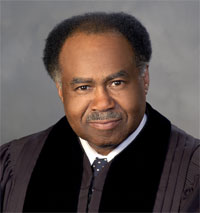
Justice Leah Sears, Chief Justice of the Georgia Supreme Court, an Inspiration to All Georgians

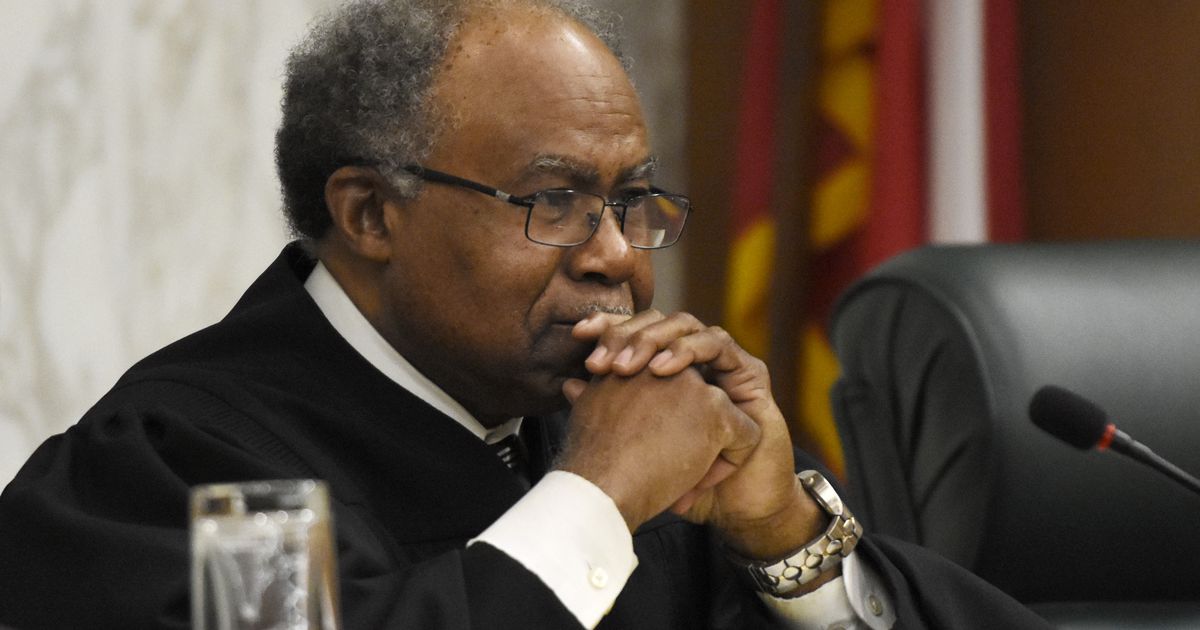
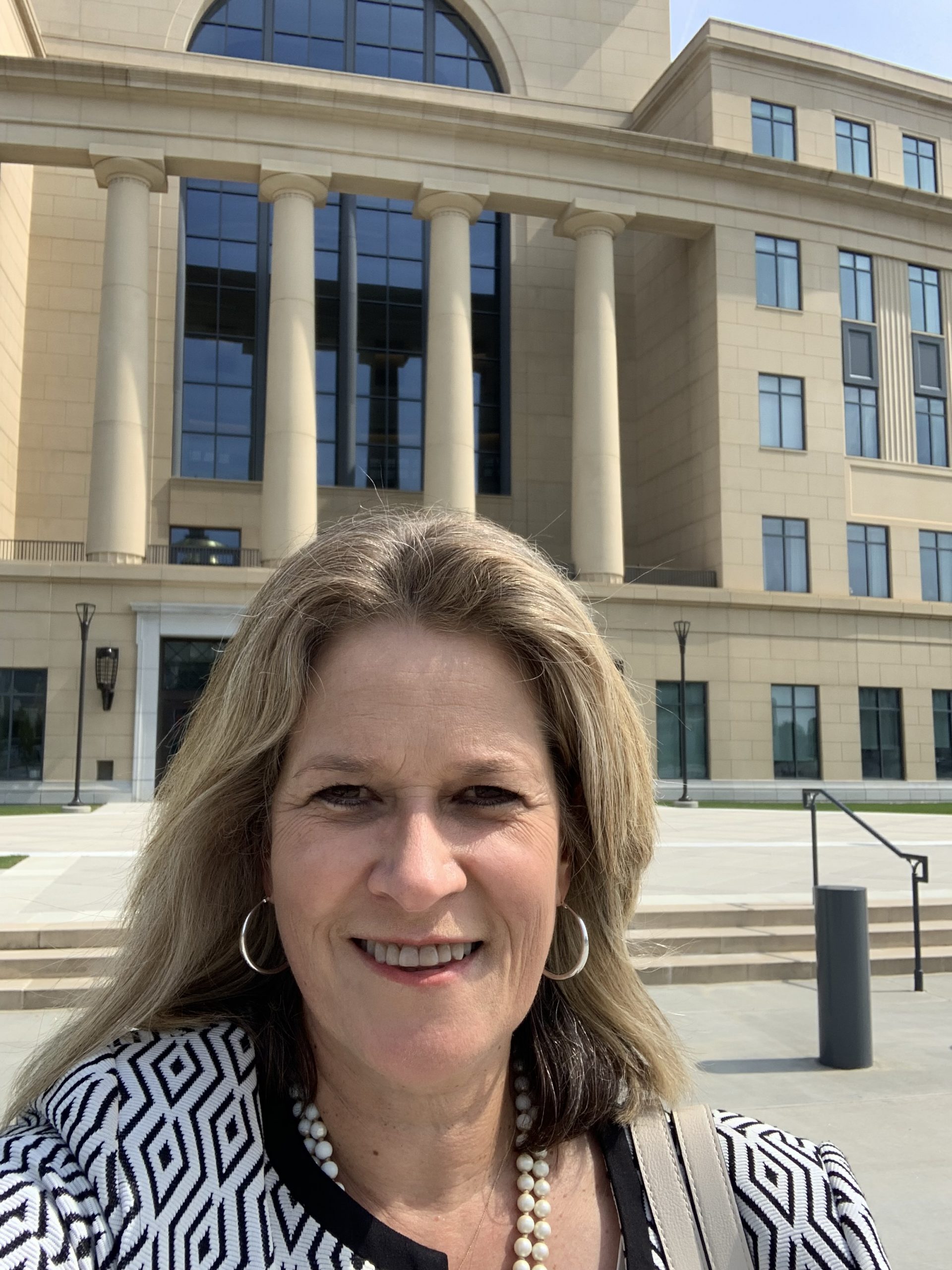
On February 4, 2009 Justice Leah Sears, the Chief Justice of the Georgia Supreme Court, gave her last State of the Judiciary address to the Georgia General Assembly. It is her last such address because she has announced she will be retiring from the bench in June of this year. Georgia lawyers will miss her, because of her absolute committment to a strong, independent Judiciary and to the Rule of Law. She is a true role model for all Georgians, especially young women like my daughter, Alex, who is now 11 years old, and who are looking for the way to make their mark on Georgia and future generations. Below I have reprinted Justice Sears' entire State of the Judiciary Address.

Lieutenant Governor Cagle, Speaker Richardson, Speaker Pro Tem Burkhalter, President Pro Tem Williams and other members of the General Assembly. Ladies and Gentlemen. I am overwhelmed by your warm welcome.

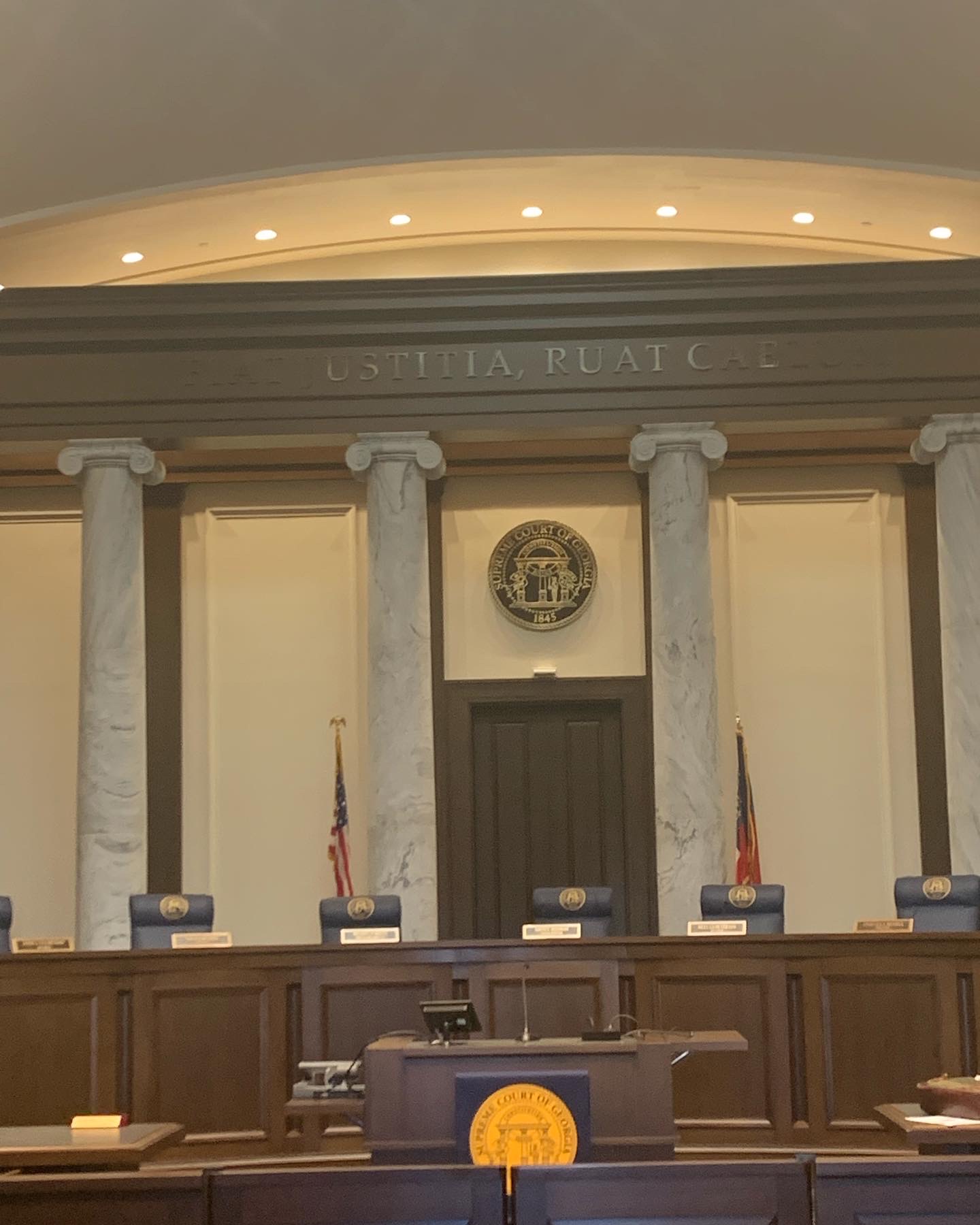
Today I stand before this distinguished body for the last time as the Chief Justice of the Supreme Court of Georgia. I am both honored and humbled. I have so many of you to thank for your years of support and encouragement. And I am forever indebted to my colleagues on the Supreme Court—my friends—Presiding Justice Carol Hunstein, former Chief Justice Robert Benham, and Justices George Carley, Hugh Thompson, Harris Hines and Harold Melton. I am also grateful to my friends on the Georgia Court of Appeals, now being ably led by Chief Judge Yvette Miller, as well as all of my other colleagues in the judicial branch.

__________________________

The judicial system's budget is less than one percent of the overall state budget, but we play a huge role in protecting the safety and security of Georgia citizens. Unfortunately, like others in state government, we have had to slash our budget to the bone. We have reduced personnel and cut our expenditures. Before this economic downturn, this state's appellate courts were well on our way toward unveiling an electronic filing system to make all our courts more accessible to people throughout the state. Such a system is a minimum requirement in this 21st century. Unfortunately, we have had to put that on indefinite hold.

We are deeply concerned, as you are, about the present financial situation and its effect on Georgians. We are particularly troubled about its impact on the delivery of justice to our citizens. Even in good economic times, the administration of justice is difficult to fulfill given the sheer volume and complexity of problems Georgians bring to their courthouses. Because of the effects of the nation's bad economy, people will need access to justice now more than ever. We already see this happening. The number of mortgage foreclosure cases in Georgia is at an all time high. Debt

collection has increased dramatically. We may also begin to see an increase in other types of problems that typically escalate during tough economic times, such as crime, child abuse, domestic violence and substance abuse.

We are frequently reminded that government cannot do everything. And that is true. Government cannot do everything, and in times like these, government cannot afford to do everything. But there are some things that only government can do, and these things it must do well. Administering justice under the law is a function that only government can fulfill. The determination of guilt and innocence, property rights and parental rights, legal privileges and power are judgments only government can make. Administering justice is one of the reasons governments exist. If we neglect this fundamental obligation to the people, we break trust with them, and ultimately, lose their confidence. And for government, public trust and confidence is everything.

No doubt you have heard what other states' judicial systems are now doing to cope with our nation's troubled economy. Some states have closed their courthouses a few days a month. New Hampshire has cut back on the number of jury trials it holds. Several states, including Utah, are leaving judgeships vacant following retirements, including a few who have vacancies on their Supreme Courts. These are drastic steps. They will deny justice to many. In Georgia, we cannot afford to go down this path.

Nevertheless, I am confident that even in the face of economic turbulence, the future of our judiciary is as bright and solid and undaunted as is the bedrock optimism of our people. After all, we are Americans. And we are Georgians. That means that, working with you and the Governor, we will be bold. We will learn to do more with less. And for the safety and security of our state, we will endure, and we will prevail.

That is in large part because Georgia is fortunate. This state's judges are among the best in the nation. I am honored to have stood with them all these years. Like me, many have devoted their careers to guaranteeing that all citizens of our state receive fair and impartial justice. I will miss being a part of “the brotherhood.” And I will miss all of you.

__________________________

It's never easy to say good-bye. I have been truly blessed. When I embarked on my judicial career 26 years ago, I never imagined that it would turn out as it has. Indeed, the world has changed much since I first became a judge. I was a mere 27 years old when Mayor Andrew Young appointed me to Atlanta's traffic court. It was 1982—the year USA Today was first published, Diet Coke was born, and the Weather Channel aired for the first time. Voicemail was patented that year, and back then, most of us lived without cell phones, e-mail or laptops. Imagine that!

To some extent, my career as a judge has been a metaphor of how much our great state has changed. In 1988, when I ran to become a Fulton County Superior Court judge, there were only four African-American superior court judges in the whole state, and only six women. I can still remember my first day on the bench. I was trying a simple zoning case when I noticed that the room was packed. Standing room only. Deputies, court reporters, administrative assistants and other spectators were lining the walls and peering through the windows. They were there to watch me try my first case, as if I were an alien who had landed in Fulton County.

And I'll never forget 1992 around Valentine's Day when Governor Zell Miller called and said to me, “Judge, I want to let you know I am going to appoint you to the Supreme Court of Georgia.” I was flabbergasted. I was only 36 years old—the youngest person ever to be appointed to the Supreme Court. I was a woman—no woman had ever served on that court. And I was an African-American—the second, just behind my friend and colleague Justice Benham. Somehow I managed to regain my composure to thank Governor Miller. And I pledged to him that I would never let him down. I have always tried to live up to that promise.

__________________________

Permit me to tell you a few of the things I have learned in the 26 years I have been a judge. I have learned that people are far more complex than the labels we sometimes affix to them. As judges, we would not be doing our jobs if we paid attention to labels because we have but one purpose: to know and uphold the laws of the State of Georgia and the United States, regardless of where the chips may fall. That means that in our work we can espouse no ideology, no partisan political views, and we must ignore the false assumptions people sometimes make.

I have learned that the people of Georgia are fortunate to have attorneys of the highest quality. I am always amazed at the ability of Georgia's lawyers to present vigorous, well-reasoned arguments on both sides of complicated issues and to answer the probing questions of the justices of our Court. I commend the State Bar of Georgia for all it does to maintain the exceptional quality of Georgia lawyers.

I have learned that whether you are a member of the legislative, executive or judicial branches, we are all servants of the people, and we are all in this together. That means we must communicate and cooperate with one another to accomplish the people's business. And we can do that in a way that preserves the integrity of all branches and honors the concept of the separation of powers.

I have learned that sometimes a whisper is better than a roar. I now know that to get your point across, you don't always need to carry a big stick. I've also learned that while you should never shy away from standing up and speaking out for that which you believe is right, you have to pick your battles. On a court like ours, the only way to succeed is with your intellect and your integrity. The best judges listen more than they talk. And they are patient. That often means that when your position doesn't prevail, you have to let it go and move on.

I have learned that the most rewarding part of my career has not been the offices I have held but the people I have met and with whom I've had the privilege of working. Since I've been Chief Justice, I have only been treated with generosity and kindness. The fact is that I have had the exceptional privilege of working with exceptional people who have dedicated years of hard—and at times heartbreaking—work to make Georgia's judicial system the very best in the nation.

__________________________

I am proud that when I step down, I will leave behind—according to a recent national study—the No. 1 most productive Supreme Court in the country. That same study ranked Georgia's high court as one of the five best state Supreme Courts in the nation, based not only on productivity but also on national influence and judicial independence. The Georgia Court of Appeals also has been ranked among the top five appellate courts in the number of opinions issued per judge.

I am also proud that Georgia has a state trial court system that works hard to ensure that all people have access to justice, no matter their status in life. Today, thanks to your support, Georgia is taking the lead with drug courts and mental health courts. This past year, both the National Highway Traffic Safety Administration and the National Council of Juvenile and Family Court Judges cited the work of Georgia's drug courts as a model for the nation.

In the past, some were skeptical of these so-called “accountability courts,” worried that they coddled criminals. But attitudes have changed because we now know that to prevent crime and save taxpayer dollars, we must break the cycles of drug addiction and mental illness that have contributed to the clogging of our courts and of our jails.

I am also proud of the work of the Georgia Supreme Court Commission on Children, Marriage and Family Law. As you know, I have long been a proponent that “children do better with parents together.” This is not just another do-good campaign unrelated to crime or justice. As a judge, I have seen daily the effects on our courts, not to mention our society, of family dissolution.

There is much sociological data that now suggests that children who grow up in healthy, intact families are less likely to engage in criminal behavior, and are more likely to have productive lives that never lead them to the inside of a courtroom. That's why marriage continues to be the most pro-child institution and antipoverty program we have.

This past year, the Commission co-hosted a national summit on marriage, bringing together experts from around the country to debate and discuss the future of this institution. Governor Perdue joined me in welcoming them to Atlanta.

I hope all of you will continue to join in the efforts to keep marriage alive and strong and valued as an institution, for the sake of our children and our nation. I assure you that whatever I do next, you have not heard the last from me on this issue.

__________________________

Time does not allow me to mention all the people who have served and worked with me through the years. Suffice it to say, the Supreme Court staff is stellar. I know that Presiding Justice Carol Hunstein will receive the same loyal support from this outstanding staff when she takes the reins as chief justice this summer. I wish her every success.

And, of course, I can never thank enough my own family, without whom I would not be here. My children, Addison and Brennan: I am so proud of the young man and woman they have grown up to become. My mother, Onnye Jean SEARS, who along with my late beloved father, always guided me and always believed in me and made me believe in myself. And, of course, my husband, Haskell Ward. Whatever I have been able to achieve as Chief Justice could not have been accomplished without the unfaltering love and support of this man. He has been my strong and steady rock for the last 10 years, and I am always thankful for that. My husband, mother and daughter are here today. Would you please stand.

__________________________

And then, of course, there are my colleagues and dear friends who have served with me on the Supreme Court. We are a collegial bunch. We are people of different perspectives and diverse backgrounds. We are a well-oiled machine that has kept the wheels of justice going in this state for about 15 years now.

At times, I have jokingly compared our little group to family members who get together just once a year at Thanksgiving. There is sometimes a bit of tension, but the respect and the love are always there. Having served so long together, we know each other well—each other's tics and predilections. We can often read each other's facial expressions and anticipate what's coming next, sometimes with dread.

I just want to say how much you all mean to me. There are many precious memories. We've worked hard together. We've argued, sometimes vehemently, only to then break for lunch and enjoy a meal together. We've shared sacrifices and tears, victories and joys. Some of you have held my hand during difficult times, and I've held yours. Each of you is a part of my life's story, and I will forever be grateful. The state of Georgia has benefitted from your service and our cohesiveness.

__________________________

As to the Court's future, my prayer is that whoever the Governor appoints to replace me would build on the progress the Supreme Court of Georgia has already made. My prayer is that the next Justice would be a fair, honest, upright person of the highest integrity, a man or woman who would walk in the same shoes as a Logan Bleckley, Joseph Lamar, Charles Weltner or Norman Fletcher. We have had the greatest of justices in this state, whose courts have not been infected by politics. And that is because our justices were never ideologues. Rather they were just good lawyers, fair and impartial judges, decent men and women.

I suppose my failure as Chief Justice was my inability to get our state's judges a much-needed raise—a raise they have not had in more than a decade. Many of you here worked hard for that goal, and I thank you. I was honored to have so many join in the effort. When our economy improves, for the sake of this state's judicial system, I urge you to renew that effort.

__________________________

I came to the Supreme Court quite young. I determined some time ago to leave before I was too old. It has been a privilege to serve here. But the court, like most institutions, needs constant replenishment with people who are not comfortable with its ways. It is time I moved on.

As to my future, my so-called “retirement” at 53 years old is by no means an end for me. Rather it's a beginning. A rebirth. A launching of a new adventure. I don't know exactly yet what it will be, but like you, I am a public servant at heart. My life has been driven by a desire to do what I can to make things better for all people. And as long as God blesses me with health and well-being, I will continue to serve in some capacity. Just as I pledged to Gov. Miller 17 years ago, I pledge to you today: Whatever I do next, I swear to you, I will not let you down.

Finally, I want to thank the people of Georgia for giving me this extraordinary opportunity. I want to thank the millions I've never met personally who are simply good, solid, hardworking people. Those who voted for me, called me with their words of support, sent me notes and wrote me letters along the way. They were the ones who decided—not once, not twice, but three times—that I was worth keeping around by electing me to office.

I am so proud of this state. I am so very proud to be a Georgian. And I am proud of all of you. God bless and comfort you. God bless Georgia. And God bless America.

Bookmark and Share

September 26, 2008

Georgia Trial Lawyers Association Height of Excellence

alaimoevent.jpg


Below is an article that appears in today's Fulton County Daily Report about last week's Height of Excellence Gala, sponsored by Georgia Trial Lawyers Association in honor of Judge Anthony Alaimo. Judge Alaimo is an incredible American citizen and an amazing citizen of Georgia. We are lucky to have him on our Federal Bench and are lucky simply to have him with us here in Georgia. I hope you'll get as much pleasure out this reading his speech as I did last week enjoying it in person.


Friday, September 26, 2008
The 'pinnacle' of a full career
Trial lawyers association awards inaugural judicial excellence honor to its namesake, Judge Anthony Alaimo
By R. Robin McDonald, Staff Reporter

(Zachary D. Porter/Daily Report)
Judge Anthony Alaimo is credited with reforming the Georgia prison system.

He was surrounded by hundreds of friends from the bench and bar last week, but Senior Judge Anthony A. Alaimo brought a host of other guests, from across centuries and continents, to the party.
In an elegant, six-minute speech, the venerable senior federal jurist from Brunswick recalled the words of poet John Donne, writers Alexander Solzhenitsyn and Marcel Proust, French composer Arthur Honegger and, indirectly from the Bible, King David and the prophet Samuel.

Alaimo was thanking the Georgia Trial Lawyers Association for creating the Anthony A. Alaimo Award for Judicial Excellence and for presenting him with the inaugural award.
The award, he told the gathering at the Ritz-Carlton in Atlanta on Sept. 18, is “the apex, indeed the pinnacle, of my professional career.”

“I've said before, I consider myself to be the luckiest man in the world because, in my entire professional life, I have been blessed to receive random acts of unearned good fortune. ... I can find no more precious gift to one who has reached the end of his professional life,” the 88-year-old judge said.

At the event, Augusta attorney John C. Bell Jr. described Alaimo as a jurist whose life and service “are shining examples for the bench, the bar and for every soul lucky enough to claim that title, citizen of the United States of America.”

Alaimo's life contains the stuff of legend—most notably his time in—and escaping from—German prison camps in World War II. But the trial lawyers association focused on his legal career, which led to the reform of Georgia's prisons.

W. Fred Orr II, president of the trial lawyers association, said this past summer in an interview after the group decided to honor Alaimo that the judge was “the natural recipient” of the inaugural award as well as its namesake.

“He is still one of the hardest working judges in the federal judiciary,” Orr said. “He has been appointed by the chief justice of the U.S. Supreme Court to almost every position of leadership that a federal judge can hold.”

Orr noted that Alaimo has often been brought into a foreign jurisdiction to oversee a case.

“When Alaimo shows up on the scene, within weeks, if not days, the case is settled,” said Orr. “He cuts through all irrelevance, immateriality. He forces lawyers to deal with reality. He's known as a problem solver among federal judges. He doesn't mind coming in and trying to be of help.”

Nor does Alaimo play favorites, Orr continued. “Alaimo does not give anybody any slack. He demands the best and generally gets the very best from the people who appear before him.”

Alaimo, who was born in Sicily and moved to New York with his family at the age of 2, was, when President Richard Nixon appointed him to the federal bench in 1971, only the second naturalized American citizen to become a federal judge, said Bell.

During his tenure on the bench, he has been a trail-blazer in civil rights and in punishing environmental polluters and a defender of the First Amendment. Some of his cases are now considered landmark cases for the reforms they initiated.

Presiding over a prison
The case to which Alaimo dedicated 25 years of his career stemmed from an inmate's civil rights complaint at Georgia State Prison at Reidsville on which Alaimo embarked in 1972, the year following his appointment.

Reidsville then held more than 3,000 of the state's most hardened criminals in segregated dormitories so crowded and violent that the guards had abdicated control of them to the inmates, according to an account in the Atlanta Journal-Constitution.
Rats were common and waste water stagnated in cell blocks, the newspaper reported.

At one point, stabbings and assaults were so common that, according to the newspaper, a former warden declared that “Jesus Christ himself couldn't solve the problems.”

“It was pretty sordid,” Alaimo told the Journal-Constitution in 1997. “I confess I was shocked.”

When he first toured the prison, he recalled in July for The Brunswick News, he found inmates treated like animals, force-fed on the floor and frequently beaten by prison guards. “Some people just look at these people like prisoners, but they are human beings,” he told the News. “And how you treat them, it does matter.”

Building on an inmate's civil rights complaint, Alaimo embarked on a reform of the state prison system, issuing a 1,200 page order in 1978 that became a model for sweeping prison reforms in Georgia and placed the prison under Alaimo's control. Alaimo's court-ordered improvements cost an estimated $400 million to $500 million, according to the state corrections department.

In 1985, conditions had improved enough so that Alaimo dismissed a court-appointed prison monitor who had acted as his eyes and ears during frequent inspections. In 1997, Alaimo finally dissolved the 1978 order. A portrait of Alaimo, painted by an inmate, hangs in Reidsville.


Prisoner of war
The son of Sicilian immigrants, Alaimo grew up in a home where the household language remained Italian. According to Bell, Alaimo earned his college tuition by learning to cut hair and operating a barber shop near the campus of Ohio Northern University, where he distinguished himself as a welter-weight boxer.

The day after the Japanese attacked Pearl Harbor, Alaimo enlisted in the Army Air Corps. In an oral history available on YouTube, Alaimo meticulously recounted his sojourn as a pilot and soldier with a clear eye for small but striking detail.

After training to fly a B-26 bomber, he and his squadron flew into a hurricane in the Caribbean, crossed the Atlantic Ocean at a lumbering 160 miles per hour, and stopped in Gambia were “we could see the fires and hear the tom-toms across the river beating out jungle rhythms.”

They flew across the Atlas Mountains and the Sahara Desert and had a chance meeting in Marrakesh with legendary singer Josephine Baker, “a striking black woman in a white turban and clinging gown” who flashed “a sparkling smile” as she gave him her autograph. He also spotted Gen. George Patton “sporting his twin pearl-handled revolvers and riding boots” in a hotel dining room.

On May 14, 1943, Alaimo's squadron completed its first bombing mission from England which ended, Alaimo recalled somberly, “with a crash of one of our pilot's battered plane over the [air] field ... . He had stuck with the ship in order to allow his crew to bail out but he failed to make it himself.

“Our euphoria ended,” he continued, with the return of another pilot who had sustained a devastating injury. “His eye was shot out and half of his face was gone,” Alaimo recalled. “I suppose that that day really marked the end of youth for all of us, because we were never the same again.”

Three days later, Alaimo and his squadron departed on a bombing run to Holland. The entire squadron was shot down. Alaimo, shot in the hip and right leg, crashed into the North Sea. The only one among his crew to survive, he was pulled from the icy ocean by a German patrol boat with a fractured right collarbone, a broken nose and head lacerations.

As a prisoner of war, Alaimo was interrogated by the Germans. On the video, he recalled, “We were never really trained in how to deal with these interrogators.”

Alaimo recalled his first prison was a “room with padded walls which led me to believe that it had been an insane asylum. The windows were shuttered and there was no light, and I remembered then Oscar Wilde's description of his incarceration 'when each day is a year and a year whose days are long.'”

Alaimo spent more than two years in German stalags, including Stalag Luft 3, which was made famous in the movie, “The Great Escape.” Alaimo himself was among those who helped to dig the tunnel but was transferred to another barracks before that breakout occurred.

“I cannot really describe to you the terrible feeling of claustrophobia which engulfed me when the gates of the camp closed behind me,” he recounted. “As we all know, the loss of liberty is one of the most serious injuries that can be inflicted upon an individual. ... It cannot be understood without having personally experienced it.

“For that reason most of us take it for granted. Freedom of locomotion, freedom to go where you please without having to account for it to anyone—except maybe your wife—is one of our most precious freedoms, one whose value is not realized until it is taken away,” he said. “I vowed then that somehow I would get out of that camp, and it took me almost two years to do so.”

Alaimo made two unsuccessful escape attempts that resulted each time in two weeks in solitary in a windowless room on nothing but bread and water. His third escape attempt was successful after he switched places with an enlisted prisoner (officers such as Alaimo were housed separately and were not assigned to work details outside the prison camp) and escaped while cleaning up rubble in Munich left by the Allied bombings.

He made his way to France, then to Italy and then to Switzerland, aided he said by members of the French resistance, Italian workers—and luck. “Luck played a tremendous part without question ... unless it was the unstinting prayers of my mother,” Alaimo recalled.

When Alaimo finally landed on U.S. soil in Bangor, Maine, “I got on my knees and hands and kissed the earth for the wonderful land that I never thought I'd see agin,” he said. “And I thought of those lines from Sir Walter Scott's 'Lay of the Last Minstrel,' where he says, 'Breathes there a man with soul so dead who never to himself has said, 'This is my own, my beloved land.' Whose heart has ne'er within him burned when home his footsteps he has turned from wandering on some foreign strand.'”

“I suppose all of us veterans returning felt the same within,” Alaimo concluded, as his voice caught gently in his throat more than a half century farther on.

'A beautiful life'
At the trial lawyers association event last week, Alaimo closed with a reference to the finale of Honegger's “King David”—an oratorio derived from the Biblical story—that he said would express his gratitude to those who had gathered to honor him. It also was a metaphor, he said—one that proved to be, in tone, close to that of his own extraordinary life.

Calling “King David” a “magnificent piece ... running over the entire range of musical expression,” Alaimo told the gathering how the oratorio encapsulated the story of King David, “telling about the prophet Samuel and the Witch of Endor, of Saul and Jonathan, of David and Goliath, of David and Bathsheba and his [David's] battles with the Philistines.”

“At the conclusion, it portrays David at the end of his life, sitting on the Mount of Olives overlooking the beautiful city of Jerusalem and the jubilant coronation of his son, Solomon,” Alaimo said.

“And as he contemplates the wonders of the universe and reminisces over his life, he looks to the heavens and cries out to Jehovah, 'Oh, what a beautiful life this has been. Bless you for having given it to me.'

“And I join in that cry. God bless you.”

Staff Reporter R. Robin McDonald can be reached at Robin.McDonald@IncisiveMedia.com Greg Land contributed to this story.

Bookmark and Share

September 18, 2008

Georgia Trial Lawyers Association's Height of Excellence Tonight in Atlanta

Trial Lawyers Association names award after Alaimo
Thu, Sep 18, 2008
By ANNA FERGUSON
The Brunswick News
In his decades as a lawyer and judge, U.S. District Judge Anthony Alaimo has earned an impressive cache of honors and awards. So many, in fact, that one award is now being named after him.
The Georgia Trial Lawyers Association will present the inaugural Anthony A. Alaimo Award for Judicial Excellence today at the association's Height of Excellence banquet in Atlanta.
And to whom will the first award be given? To none other than the man himself.
When pondering for whom the award should be named, Fred Orr, president of the association, and an association selection committee unanimously decided that Alaimo's name was perfect for the award. They, too, unanimously declared that Alaimo should be its first recipient.

"It is very appropriate that the first award given by the members of Georgia Trial Lawyers Association for judicial excellence carries the name of Judge Anthony A. Alaimo and that he will be the very first recipient," said Orr. "He is among the most beloved and respected judges of the federal judiciary. He is a true American hero."
Alaimo earned this hero status long before he became a lawyer and a judge. He earned it when he served in the U.S. Army Air Corps flying a B-26 as a member of the 322nd Bomb Group during World War II.
Alaimo's plane was shot down over the North Sea and he was captured. His participation in numerous daring escapes from a German POW camp helped inspire the 1963 film, "The Great Escape."

"Judge Alaimo is, in so many ways, a fascinating character," Orr said. "Everyone I have talked to is thrilled he is being honored and will be attending the event. He is a hero to so many people."
At 88 years old, Alaimo, a Sea Island resident, continues to be an active member of the regional judiciary. Five days a week, he enters his office in the Frank M. Scarlett Federal Building, 805 Gloucester St., downtown, where he is met with stacks of paperwork and duties.
"He has a record of being fair and honest, working hard and being efficient," Orr said. "He is one of the hardest working judges in the country."
Alaimo, too, has a history with the association. Prior to being appointed to the U.S. District Court for the Southern District of Georgia in 1971 by then-president Richard Nixon, Alaimo was a trial lawyer and served as the eighth president of the association in 1968. Alaimo served as chief judge of the district until 1990, taking senior status in 1991, and continues to serve under that title.
"His picture still hangs in our hallway," said Orr. "Judge Alaimo is highly regarded as one of the most diligent judges in the entire federal judiciary. His skill is simply unmatched."
The award presentation and ceremony honoring Alaimo will be at the Ritz Carlton in Atlanta.


Bookmark and Share

June 17, 2008

Georgia Supreme Court Hailed as Most Productive

gasupremecourtfullcourt.jpg

As a plaintiff's personal injury trial lawyer who is genuinely concerned about maintaining the independence of the judiciary, I am proud to report the Supreme Court of Georgia is the most productive high court in the country, according to a recent study by The University of Chicago Law School. Among the 50 states’ highest courts, the Georgia Supreme Court issues 58 opinions per justice a year – more than any other state. The median is 23 opinions per judge in Kansas, and the low is 12 written opinions per judge in Oregon.

Other studies have sought to rank the nation’s high courts. But this one, entitled, “Which States Have the Best (and Worst) High Courts?” measured three areas of quality – productivity, influence and independence.

The study’s authors concluded that while no state is a clear winner in all categories, California probably has the “best high court.” But Georgia is ranked among the top five.

Productivity is a sign of the quality of judges, the authors state. High publication rates are an objective measure of “a high-quality judge,” and an indication that many disputes among people are being resolved, and the public is being informed about their reasoning.

“I am proud and honored by the results of this study,” said Chief Justice Leah Ward Sears. “After 16 years of serving on this Court, I am keenly aware of how hard my colleagues work and of how committed each of us is to upholding justice for all Georgia citizens.”

The full study is available on line at: https://www.law.uchicago.edu/files/405.pdf

Bookmark and Share